From Experimentation to Ecosystem
If the last few years were defined by rapid, often chaotic experimentation with artificial intelligence, 2026 marks the era of the integrated ecosystem. With an estimated 86% of educational organisations now utilising generative AI, the conversation has fundamentally shifted. We are no longer asking if we should use AI in the classroom, but rather how we govern it, scale it, and use it to drive genuine, measurable student success.
The global AI education market is surging—projected to cross the $136 billion mark by the next decade—and this capital is fueling a profound transformation in how we teach, learn, and manage our schools.
1. Hyper-Personalised Adaptive Learning
AI is finally delivering on the decades-old promise of individualised education at scale. Instead of a one-size-fits-all curriculum, modern classrooms are functioning as dynamic environments.

Real-Time Intervention: Adaptive platforms analyze student inputs instantly, identifying specific knowledge gaps and adjusting the difficulty of the material before a student falls behind.
Accessibility and Inclusion: AI-driven text-to-speech, real-time translation for English Language Learners (ELL), and voice-recognition technology tailored for younger children are actively dismantling traditional barriers to entry.
2. Slaying the Administrative Dragon
Teacher burnout remains one of the most critical challenges in global education. Fortunately, AI's most immediate and measurable impact is happening behind the scenes, effectively acting as a digital teaching assistant.
Automated Assessments: Educators are utilizing AI to grade objective tests and generate baseline feedback on complex written work, freeing up hours of time.
Intelligent Lesson Planning: Teachers are prompting AI to generate differentiated lesson plans tailored to specific learning styles, curate curriculum-aligned resources, and draft routine communications to parents.
The Result: A noticeable shift in resource allocation. By automating the heavy lifting of administration, educators are reclaiming their time to focus on what matters most: direct human connection and mentorship with their students.

3. The New Era of AI Governance
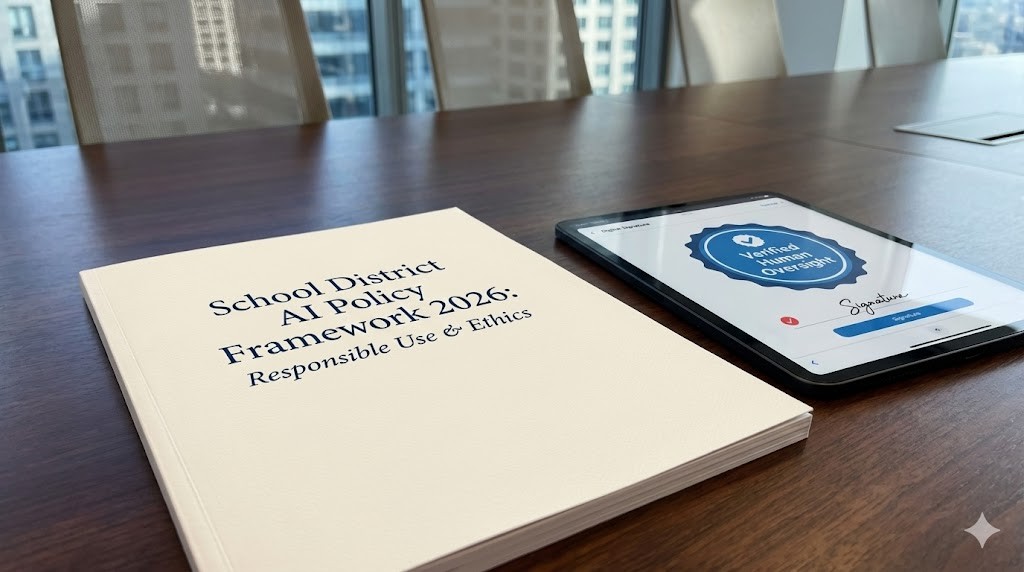
The "Wild West" days of unchecked AI usage are over. As tools become deeply embedded into school IT infrastructures, strict policy frameworks are taking center stage. Influenced by major legislation like the EU AI Act and tightening global data privacy standards, schools are replacing reactionary bans with comprehensive "Responsible AI" policies.
These new frameworks mandate:
Data Privacy: Strict boundaries on what student data can be fed into AI models.
Transparency: Clear guidelines requiring both students and staff to declare when and how AI was used in their work.
Human Oversight: A core principle that AI is a tool for support, not a replacement for human judgment, particularly in grading and safeguarding.
4. AI Literacy as a Core Competency
We are no longer just teaching with AI; we are teaching about AI. Governments and institutions recognize that thriving in the modern workforce requires fluency in working alongside intelligent systems. The curriculum is adapting to teach students how to write effective prompts, critically evaluate AI-generated outputs for bias or hallucination, and use AI as a collaborative partner rather than a shortcut for their own critical thinking.
The Road Ahead
The integration of AI in education is a paradigm shift comparable to the introduction of the internet itself. Success in 2026 and beyond won't come from simply purchasing the most advanced tools, but from intentionally designing environments where technology amplifies human potential, guided by strong ethics and a relentless focus on student outcomes.